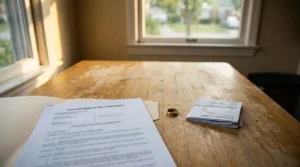
How Austin’s 2026 Buyer Market Changes the Equation for Divorcing Homeowners
When Austin’s residential real estate market has shifted significantly, it can create direct legal consequences for spouses navigating divorce. Once median home prices are down over 15% and nearly half of all active listings are carrying price reductions, the marital home may carry less equity than expected. For individuals managing complex financial portfolios, business interests, or layered income streams, understanding how a buyer market intersects with Texas community property law is essential to protecting long-term financial exposure.
If you are contemplating divorce or responding to a filing, Lackey Law can help you evaluate how current market conditions affect your property division strategy. Call 888-705-0307 or reach out to schedule a consultation.

Why the Austin Housing Market Matters to Your Divorce Attorney in Austin, TX
Market conditions directly influence legal strategy surrounding your marital home. In a seller’s market, spouses may have competed over who retains a rapidly appreciating property. In past years when the market was strong, the strategy looked different. When median sales prices decrease, properties are spending longer average days on market, and active listings carry price drops, this can signal a change. These conditions affect everything from buyout valuations to the feasibility of court-supervised sales.
A divorce attorney evaluating your case may have you consult with experts to account for this market reality when advising on property division. The home’s current fair market value, not its peak-era appraisal, drives legal and financial analysis. Independent appraisals and broker’s opinions become critical in a declining market where comparable sales vary widely across neighborhoods.
💡 Pro Tip: Request an independent appraisal timed to meet expert disclosure deadlines but also request an update close to your final hearing or mediation date. In a declining market, even a three-month-old appraisal may overstate value and skew equity calculations.
Community Property Rules and the Marital Home in Austin
Texas is a community property state, which means a home acquired during marriage is generally presumed community property subject to division. All property possessed by either spouse during or at dissolution of marriage is presumed community property unless a spouse establishes by clear and convincing evidence that it is separate property. Separate property includes assets such as those owned before marriage, acquired during marriage by gift or inheritance, or received as recovery for personal injuries (except lost earning capacity). This distinction matters when the home was purchased with pre-marital funds, inherited money, or trust assets.
Texas law requires community property be divided in a manner that is “just and right,” which does not necessarily mean a 50/50 split. Courts can also consider factors such as each spouse’s earning capacity, children’s needs, fault in the breakup, and asset nature. For business owners and executives with significant marital estates, the home is typically one component of broader allocation including retirement accounts, investment portfolios, and business interests.
How Classification Disputes Affect Timing
Disagreements over whether a home is separate or community property can significantly extend the divorce timeline. If one spouse used separate property funds for the down payment but community funds serviced the mortgage, a reimbursement claim may arise. These claims require detailed fund tracing, often supported by forensic accounting. In a declining Austin market, delays may erode the asset’s value while litigation continues.
💡 Pro Tip: Gather mortgage statements, bank records, and closing documents early. Clear documentation of funding sources strengthens your position on classification and reimbursement claims.
Three Legal Paths for the Marital Home in a Divorce Attorney in Austin, TX Case
Divorcing spouses in Austin generally face options such as a buyout, an ordered sale, or a deferred sale. Each carries distinct legal, financial, and procedural implications in a buyer market.
|
Option |
How It Works |
Key Consideration in 2026 |
|---|---|---|
|
Spouse Buyout |
One spouse retains the home and compensates the other for their equity share |
Declining values may reduce the buyout amount but refinancing at current rates can be challenging |
|
Court-Ordered Sale |
The court orders the home sold and divides proceeds |
Longer days on market and price reductions may reduce net proceeds |
|
Deferred Sale |
Sale is postponed (often until children reach a certain age) |
Risk that values decline further, creating future disputes over timing |
The Buyout: Securing Your Equity with a Lien
When one spouse retains the home, the equity owed to the departing spouse may be secured by a lien on the property. An owelty lien is the standard mechanism courts use to secure the departing spouse’s equity interest. Without such a lien, enforcement becomes extremely difficult or impossible. This is critical protection, particularly when the retaining spouse’s ability to refinance or liquidate other assets is uncertain.
Ordering a Sale in a Declining Market
The Final Decree of Divorce can order the marital home sold and specify how proceeds should be split. In an environment where homes sit longer and sellers adjust prices downward, a forced sale may yield less than anticipated. Safeguard may be put in place to address minimum sale price thresholds, listing timeline, and allocation of carrying costs during the sale period.
The Special Warranty Deed Requirement
A Special Warranty Deed is generally signed by the departing spouse and filed with the county clerk’s office to transfer title. Depending on the specific arrangement in a case, without this, the retaining spouse could face title complications that delay or prevent a future sale. A divorce decree can include specific deadlines and enforcement mechanisms for this transfer.
💡 Pro Tip: Even after the decree awards the home to one spouse, the mortgage obligation does not change. If both spouses are on the mortgage, the lender can still seek payment from either spouse regardless of decree terms. Refinancing into a sole obligation or assumption is a separate but critical step.
Written Agreements Under Texas Family Code §7.006
Spouses may negotiate a written agreement concerning division of the marital home and other property. Under Texas Family Code §7.006, spouses may enter into written agreements concerning property division, liabilities, and maintenance to promote amicable dispute settlement. If the court finds the terms just and right, they become binding and may be incorporated into the final decree. For high-asset divorces where the home is one piece of a multi-asset negotiation, understanding this the written agreement concerning the division of assets and liabilities is essential to structuring enforceable interim arrangements.
💡 Pro Tip: If you reach an agreement on the home early, consider what type of agreement, whether a Rule 11 agreement, informal settlement agreement or mediated settlement agreement, provides stronger enforceability.
What Happens If Property Is Not Divided in the Decree
If a divorce decree fails to address the marital home or any other community property, the issue does not disappear. Under Texas Family Code §9.203, if the court rendering the decree had jurisdiction over the property or spouses, it shall divide undivided property in a manner deemed just and right. Under §9.201(a), either former spouse may file suit to divide property not divided in the final decree.
This post-decree process carries additional procedural constraints. Under §9.005, a party may not demand a jury trial in proceedings under Subchapter A (Suit to Enforce Decree); this prohibition does not apply to Subchapter C proceedings to divide undivided property, which are governed by the rules applicable to civil cases and may permit a jury trial. A suit to divide undivided property is subject to limitations under §9.202: the suit must be filed before the second anniversary of the date a former spouse unequivocally repudiates the existence of the other former spouse’s ownership interest and communicates that repudiation to the other former spouse; the two-year period is tolled while a Texas court lacks jurisdiction over the spouses or the property. These provisions underscore the importance of ensuring every community asset, including the marital home, is addressed in the original decree.
💡 Pro Tip: Before your decree is finalized, conduct a thorough review of all real property holdings, including property in other states or jointly held investment real estate. Omissions can result in costly post-decree litigation.
Frequently Asked Questions
1. Does a divorce decree release me from a mortgage in Texas?
No. A divorce decree does not release a spouse from mortgage obligations. If both spouses are on the mortgage, the lender can still seek payment from either spouse regardless of decree terms. Provisions for applying to refinance of the mortgage can be incorporated into the final decree.
2. Can the court force the sale of our Austin home during a divorce?
Yes. Depending on the characterization of the asset, the court may order a community property home sold and specify how proceeds are divided as part of the Final Decree. In a buyer’s market, both spouses should consider how extended days on market and potential price reductions may affect net proceeds.
3. What does “just and right” mean for property division in Texas?
Texas law requires community property be divided in a “just and right” manner, which does not automatically mean 50/50. Courts can weigh multiple factors, including each spouse’s earning capacity, fault grounds, and the overall composition of the marital estate.
4. What happens if our divorce decree did not address the house?
Under Texas Family Code §9.201(a), either former spouse may file suit to divide property not awarded in the final decree. The court shall divide that property in a just and right manner under §9.203, though a statute of limitations under §9.202 may apply.
5. Why is a lien important when one spouse keeps the home?
When one spouse retains a community property home and owes equity to the other, that obligation can usually be secured by an owelty lien on the property. Without a lien, the departing spouse may have no practical means to enforce collection of the awarded amount.
Protecting Your Interests in a Shifting Austin Market
Austin’s 2026 market has introduced new variables into an already complex area of Texas family law. When home priced are declining, houses listing periods are extended, and buyers have more leverage, it can affect how the marital home should be valued, divided, or sold during divorce. The legal framework remains the same: full disclosure, accurate valuation, and a decree that addresses every community asset.
-
Obtain a current, independent appraisal before agreeing to any buyout figure
-
Ensure equity obligations are secured by an owelty lien on the property, where applicable
-
Confirm a Special Warranty Deed is executed and filed after the decree, where applicable
-
Verify that mortgage refinancing occurs to remove the departing spouse’s liability, where applicable
-
Address all real property in the decree to avoid post-decree litigation under §9.203
If you need guidance from a divorce attorney in Austin, TX who understands both the legal framework and current market dynamics, contact Lackey Law. Call 888-705-0307 or request a consultation online to discuss your situation.